Mapping similarity to false memory
A computational cognitive-science study testing which representation of similarity best predicts when people remember words they never saw.
View projectAbout
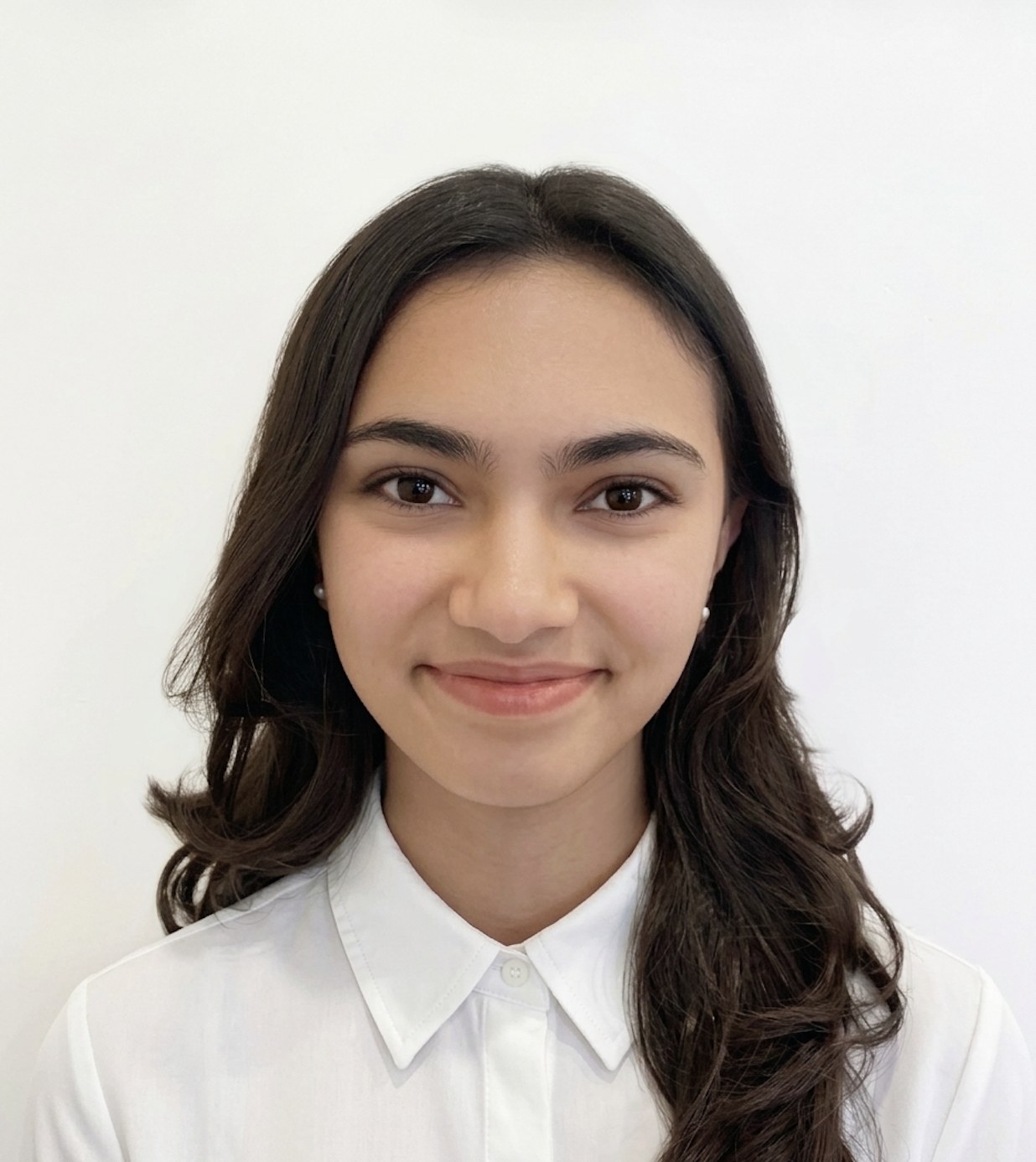
Hello! I am Diya Gupta, a student at Los Altos High School. I am interested in how artificial intelligence represents meaning, how symbolic systems encode ideas, and how mathematics can make complex patterns precise. Outside of these interests, I enjoy baking, reading, hiking, and thrifting.
Selected work
Projects in cognitive science, mathematics, accessibility, and computational memory.
A computational cognitive-science study testing which representation of similarity best predicts when people remember words they never saw.
View projectSix weeks of number theory, proof writing, and collaborative research on Diophantine approximations.
View projectAn independent computational-memory project exploring how sensory cues, emotion, and learned personal associations shape what we remember.
View projectAn accessibility app with writing support, number-sense checks, adaptive practice, and progress tracking for learners with dyslexia or dyscalculia-related difficulties.
View projectFlagship research · ASI / ISEF
Research in progress
In the Deese–Roediger–McDermott paradigm, people study a list of related words—such as bed, rest, and dream—then often remember a closely related word like sleep that was never shown. My research asks what kind of similarity best explains that effect.
Which representation of similarity best predicts published human false-recall and false-recognition rates across 55 DRM word lists when the memory equation is held fixed?
The approach
Each DRM list contains 15 studied words and one unpresented “critical lure.” I calculate the similarity between every studied word and its lure, then compare six representational spaces under the same global-matching framework.
False recall and false recognition are treated as separate continuous outcomes. The final comparison will use held-out predictions and prespecified metrics—RMSE, MAE, Pearson correlation, and Spearman correlation—so each representation is evaluated on equal terms.
Research timeline
This is a living record of the project. Each phase holds its planned goal and a results log that will grow as analyses are completed.
Read into the DRM literature, define what a finished comparison must contain, and turn the published appendices into a reproducible data pipeline.
Reconcile independent entries, validate every list and outcome, preserve source provenance, and release an immutable analysis dataset with checksums.
Give every representation the same interface, audit missing words, and compare the geometry of each space before any memory outcome is modeled.
Specify one global-matching equation before analysis, then compare held-out false-recall and false-recognition predictions across every completed space.
Results will be added here as this phase develops.
Ask which specific critical lures are predicted to intrude, inspect residuals, and test whether recall and recognition favor different similarity spaces.
Results will be added here as this phase develops.
Turn committed figures and tables into a full methods-and-results narrative, abstract, poster, and science-fair application.
Results will be added here as this phase develops.
Use judging questions to improve the explanation, carry the strongest result through fair season, and prepare the finished work for journal submission.
Results will be added here as this phase develops.
ASI · False memory
Notes from our work: what we tried, what we learned, and what comes next.
Loading journal…
Independent research
Notes from our work: what we tried, what we learned, and what comes next.
Loading journal…
PROMYS · Summer 2026
At the Program in Mathematics for Young Scientists, I spent six weeks at Boston University immersed in problems that did not come with a formula or an obvious first step. The experience taught me to treat uncertainty as an invitation: test small cases, look for structure, make a conjecture, and keep refining it until the proof holds.
Daily Number Theory lectures and problem sets formed the center of the summer. Instead of being handed finished theorems, I used numerical experiments to find patterns, formulate claims, and develop proofs from first principles. Feedback from counselors and conversations with other students made proof-writing feel less like recording an answer and more like communicating an idea with precision.
In my Expo Lab, my team studied Diophantine approximation: how fractions can come as close as possible to an irrational number. We combined the recursive structure of continued fractions with the geometry of Farey tessellations, tracing rational approximations as geodesics in the upper half-plane.
Using determinant-one matrices, we developed a geometric way to peel back layers of the tessellation and move toward increasingly accurate convergents. We then connected that picture to a proof of optimality: a fraction that improves on a continued-fraction convergent must have a larger denominator.
Read our final paperPROMYS changed my relationship with mathematics. I became more patient with problems that resisted an immediate solution, more willing to revise a promising idea, and more attentive to the difference between evidence and proof. Just as importantly, I learned that deep mathematical work is collaborative: the strongest ideas often emerged while comparing examples, questioning assumptions, and explaining a proof to someone else.
Explore mathematics at PROMYSIndependent research · In development
Sensory Memory LabA familiar song, the smell of a family meal, or a glimpse of a place can bring an experience back with surprising force. I am building a transparent computational model to study how sensory overlap, emotion, time, and personal context work together during retrieval.
The goal is not to imitate an individual brain. It is to turn specific ideas about remembering into measurable, falsifiable predictions.
How much do learned cue associations and personal context improve predictions of remembering beyond sensory modality alone?
Represent an event through sensory features, attention, emotional conditions, and context.
Model how accessibility changes with elapsed time, rehearsal, and competing experiences.
Let a partial cue activate several candidate event traces, including a no-retrieval outcome.
Test the model with synthetic recovery, stress tests, and held-out human observations where suitable data exist.
The model
Each event is stored as a trace with modality-specific features—such as sound, odor, visual content, and taste—plus its context, time, and observed encoding conditions. When a later cue appears, the model scores overlap only across genuinely shared information and combines it with contextual matching and a transparent retention rule.
A probabilistic competition then produces one of three outcomes: retrieve the intended event, retrieve a competing event, or retrieve nothing. Every term remains visible so I can test what changes when a cue is missing, conflicting, unfamiliar, or shared by several memories.
Measured separately
First empirical direction
The first planned analysis asks whether recorded personal-association variables improve held-out predictions of memory vividness beyond cue type, familiarity, rehearsal, and age group. Music- and food-evoked memory diaries offer a useful starting point because they separate cue familiarity from a person’s learned relationship to that cue.
Scientific boundary
Synthetic examples can show that the equations behave as intended, but they cannot establish how human autobiographical memory works. Empirical claims will use untouched participants or stimuli, appropriate baselines, uncertainty estimates, and failure cases. Retrieval probability, vividness, emotion, nostalgia, and accuracy will never be collapsed into one “memory strength” score.
Research scope and candidate architecture defined. Next: choose the primary empirical emphasis, inspect the selected dataset and codebook, then build the first transparent simulator and baseline comparison.
Sensory Memory Lab
Notes from our work: what we tried, what we learned, and what comes next.
Loading journal…
Accessibility app
Read + CountI built Second Look to support children who process words or numbers differently. The app pairs a dyslexia-friendly writing checker with a number-sense experience designed around skills that can be difficult for learners with dyscalculia.
Signed into law on September 27, 2026, SB 1067 requires California schools to screen kindergarten through second-grade students annually for early math difficulties beginning in the 2028–29 school year and to provide evidence-based support when students need it. The law complements California's existing K–2 reading-difficulties screening requirement. Second Look responds to the same need for earlier support, but it is a practice tool—not a diagnostic instrument or an official school screener.
Flags misspellings and harder real-word mix-ups, then gives graduated hints so a student can identify and correct the error instead of receiving an automatic answer.
Checks dot sense, symbolic magnitude, quantity–numeral mapping, and number-line estimation, then recommends practice based on the learner's weakest relative skill.
Includes three number-sense activities and an adult dashboard showing accuracy, response time, recurring patterns, session history, and change over time.
Beyond research
Robotics, swimming, and math tutoring.
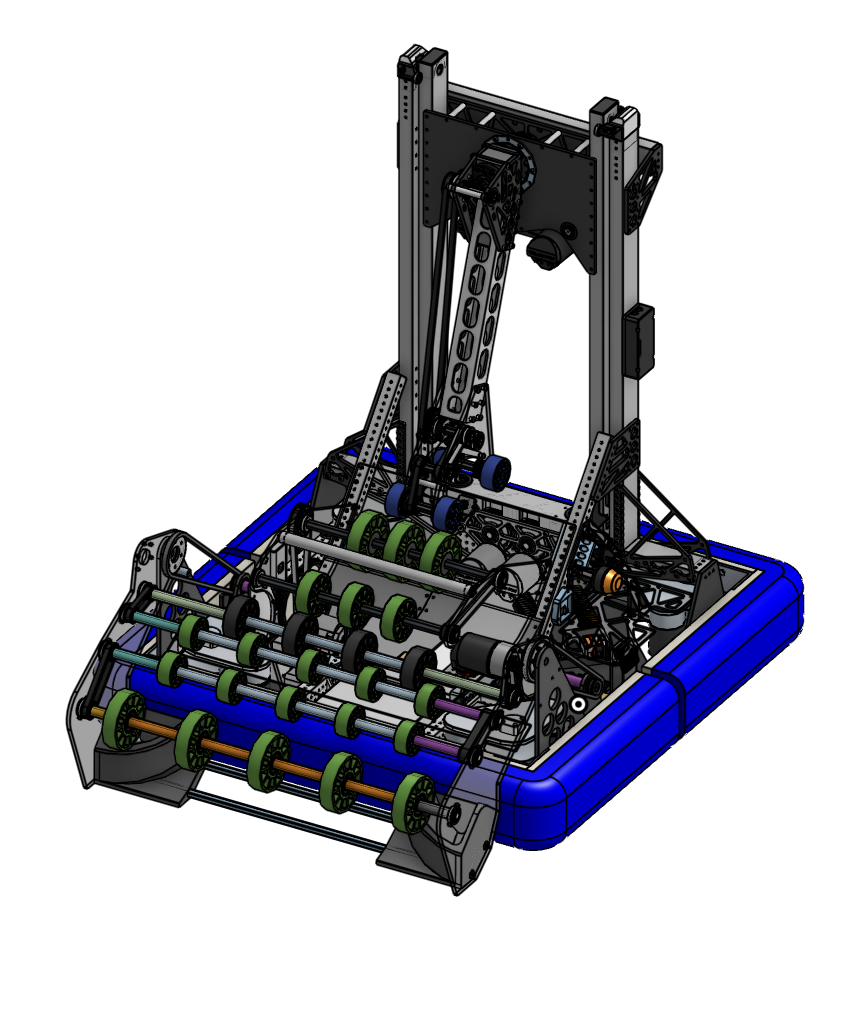
I am a member of my school's FRC robotics team, EagleStrike Team 114, where I serve as a lead of code. I work on coding the various subsystems of the robot. I also have worked to teach code to new members of the team.
Theseus was the team's second robot for the 2025 REEFSCAPE season. Its software used Java and WPILib to control the intake, elevator, and end effector, run autonomous paths, and align the robot to the reef with front and rear cameras.
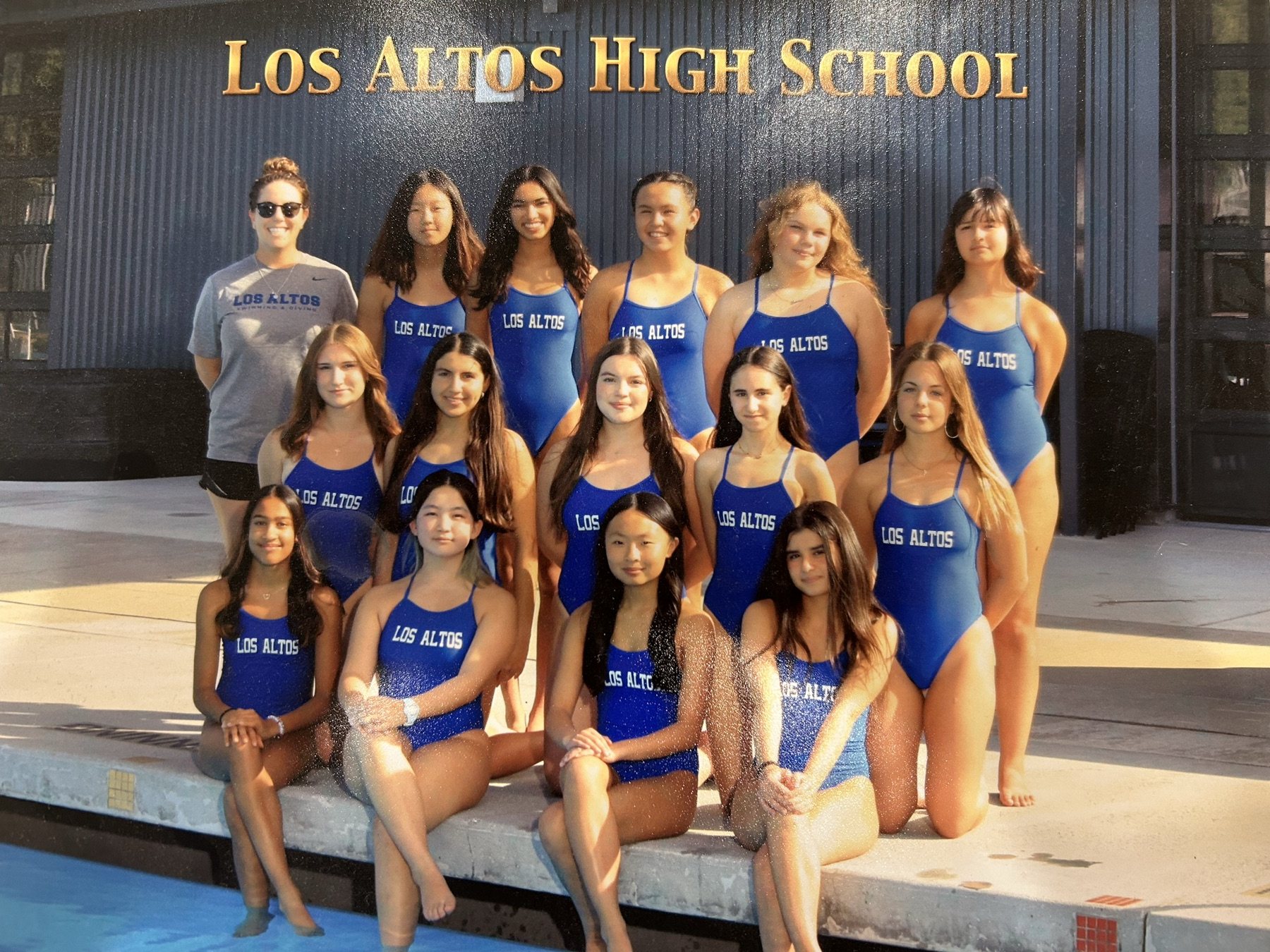
I have been swimming since 4th grade. I began swimming for Palo Alto Stanford Aquatics. I now swim on my school team as well. My favorite event is the 100 breaststroke.
I volunteer with Buddies4Math to teach math to underprivileged elementary-school students in local schools. Through weekly after-school tutoring, I help students work through problems, build confidence, and see mathematics as something they can explore rather than something to fear.
Teaching has made me more attentive to how different students think. I have learned to explain the same idea in several ways, listen for where confusion begins, and celebrate the moment a student finds a path that makes sense to them.
Learn about Buddies4MathSelected writing